Teach English in South Korea
A friendly, practical guide for anyone thinking about teaching in Korea. This guide gives you a clear, honest overview of what to expect, what you’ll need, and how to get started to teach English in South Korea.
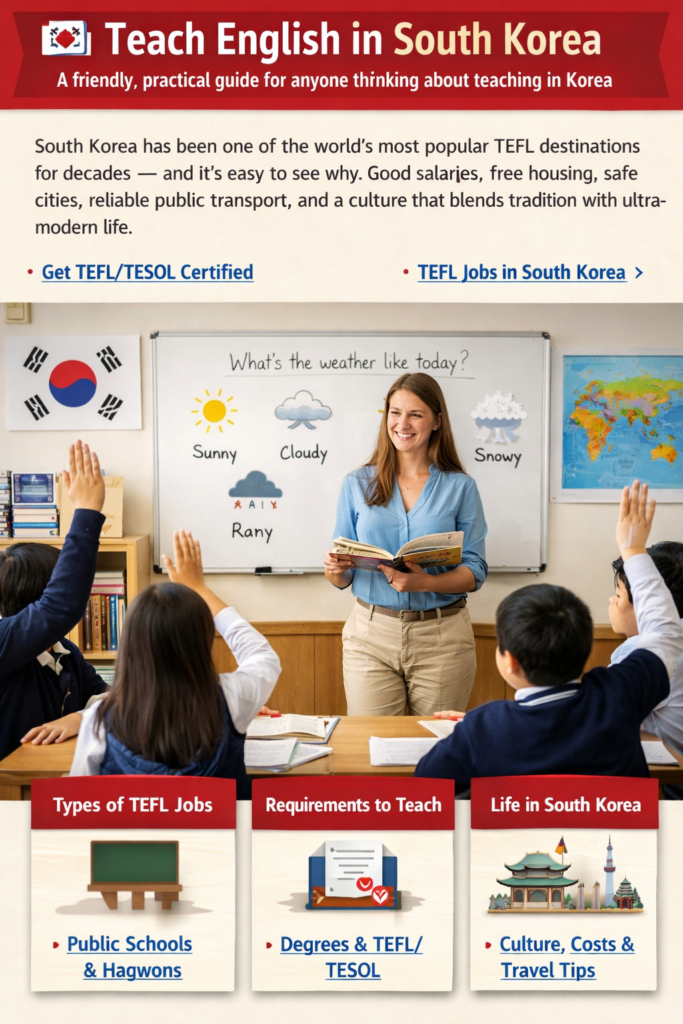
South Korea has been one of the world’s most popular TESOL destinations for decades — and it’s easy to see why. Good salaries, free housing, safe cities, reliable public transport, and a culture that blends tradition with ultra‑modern life. Whether you’re drawn to Seoul’s energy, Busan’s beaches, or quieter towns with a slower pace, Korea offers a teaching experience that feels both exciting and stable.
🌟 Why South Korea is such a popular TESOL destination
People choose Korea for a mix of lifestyle and financial reasons:
- Competitive salaries compared to the cost of living
- Free housing or a generous housing allowance
- Paid flights (in many cases)
- Low crime rates and very safe cities
- A strong demand for English teachers year‑round
- A structured visa process that’s predictable and straightforward
- A great social scene for expats and locals alike
It’s one of the few countries where you can save money and enjoy a comfortable lifestyle at the same time.
💼 Types of teaching jobs in South Korea
You’ll find two main pathways:
1. Public Schools (EPIK, GEPIK, SMOE)
These roles offer stability and a regular schedule.
- Monday–Friday, usually 8:30–4:30
- 18–22 teaching hours per week
- Longer holidays than private schools
- Good for first‑time teachers
2. Private Language Schools (Hagwons)
These are after‑school academies.
- Afternoon/evening hours
- Often higher salaries
- Smaller class sizes
- Fast‑paced environment
Both options have their fans — it depends on your personality and preferred schedule.
💰 Salary expectations
South Korea pays well, especially when you factor in free housing.
Typical monthly salary:
- 2.1–2.7 million KRW for new teachers
- 2.8–3.5 million KRW for experienced teachers or those with higher qualifications
Extra benefits often include:
- Free apartment or housing allowance
- One‑month salary bonus at the end of contract
- Paid flights (varies by employer)
- National health insurance
- Pension contributions (refundable for many nationalities)
Most teachers save £600–£1,000+ per month without living frugally.
📄 Requirements to teach in South Korea
South Korea has clear, non‑negotiable requirements for the E‑2 visa.
You’ll need:
- A Bachelor’s degree (any subject)
- A clean criminal background check
- A passport from an English‑speaking country (UK, Ireland, USA, Canada, Australia, NZ, South Africa)
- A TEFL/TESOL certificate — strongly preferred and often required
- Apostilled documents (degree + background check)
A TEFL/TESOL certificate from TeachEnglish.co.uk strengthens your application and helps you stand out.
🏙️ What it’s like to live in South Korea
Life in Korea is a blend of convenience and culture.
- Public transport is cheap, clean, and incredibly reliable
- Food ranges from street snacks to high‑end dining
- Healthcare is excellent and affordable
- Internet speeds are among the fastest in the world
- Social life is lively — cafés, karaoke rooms, festivals, hiking groups, expat meetups
Most teachers say the same thing: Korea is one of the easiest countries to settle into, even if you’ve never lived abroad before.
🕒 When to apply
Hiring happens throughout the year, but the biggest intakes are:
- February/March (spring semester)
- August/September (autumn semester)
Hagwons hire year‑round, so you can apply at any time.
✈️ How to get started
Here’s the usual order:
- Get your TEFL/TESOL certificate
- Prepare your documents (degree, background check, apostilles)
- Apply to schools or programs
- Interview online
- Receive your contract
- Apply for the E‑2 visa
- Fly to Korea and begin orientation
We can help you with step 1 — your TEFL/TESOL training — so you’re ready for the rest.
❓ Frequently asked questions
Is Korea good for first‑time teachers? Yes. The structure, support, and benefits make it ideal for beginners.
Do I need to speak Korean? No. It helps socially, but it’s not required for teaching.
Can I save money? Most teachers save a significant amount thanks to free housing and low living costs.
Is it safe? Extremely. Korea consistently ranks as one of the safest countries in Asia.
⭐ Recommended TEFL Courses
LTTC Level 5 OFQUAL Certificate in TEFL
Useful Links
Official Government & Visa Information
- Korean Immigration Service (HiKorea) – Visa & E‑2 Requirements Official portal for visa applications, E‑2 teaching visa rules, document requirements, and immigration appointments.
- Ministry of Justice – Korea Visa Portal Clear breakdown of visa categories, eligibility, and processing steps.
🏫 Public School Teaching Programmes (Official)
- EPIK – English Program in Korea (Government‑run) The main public school recruitment programme.
- GEPIK – Gyeonggi English Program in Korea (Gyeonggi Provincial Office of Education) Programme for teachers placed in Gyeonggi Province (Seoul suburbs).
- SMOE – Seoul Metropolitan Office of Education Official site for teaching placements within Seoul public schools.
💰 Cost of Living & Life in Korea
- Korea Tourism Organization – Official Travel & Culture Guide Reliable cultural, lifestyle, and city‑specific information.
- Numbeo – Cost of Living in South Korea Crowdsourced but widely used for accurate cost‑of‑living comparisons.
- Seoul Metropolitan Government – Living in Seoul Practical info on housing, transport, healthcare, and daily life.
🏥 Healthcare & Insurance
- National Health Insurance Service (NHIS) Official information on Korea’s mandatory health insurance system for foreign teachers.
- Korea Centers for Disease Control & Prevention (KCDC) Health guidance, vaccinations, and public safety updates.
📚 Education & Work Regulations
- Ministry of Education (Republic of Korea) Policies, school structure, curriculum, and teacher guidelines.
- Ministry of Employment & Labor